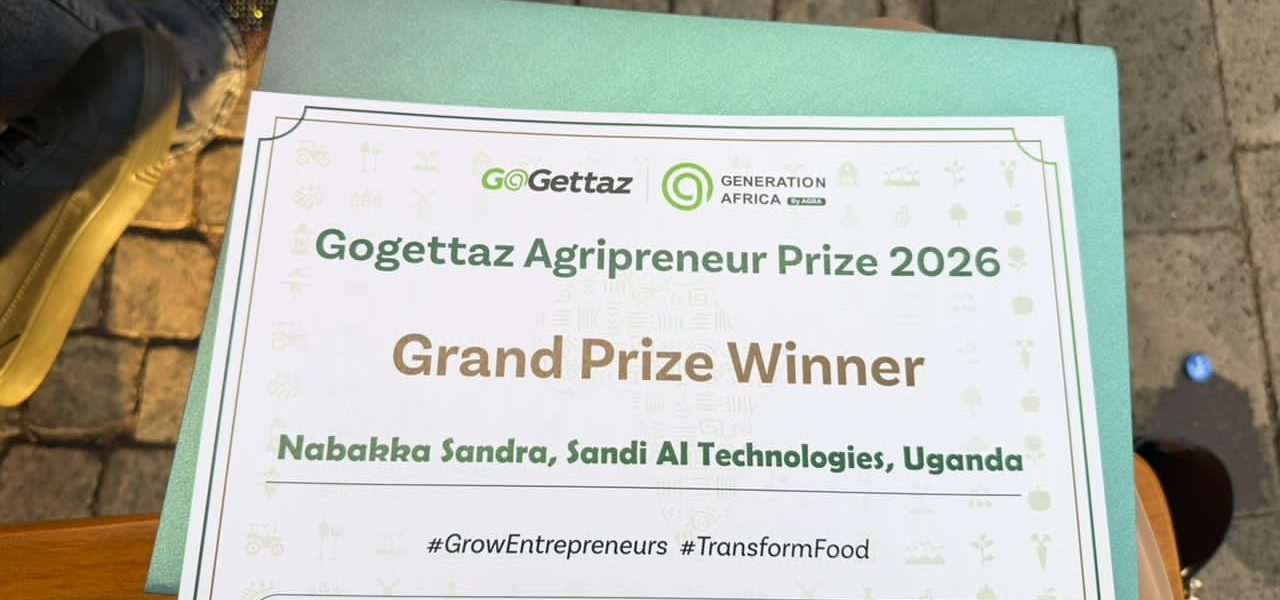

A Ugandan startup just won US$50,000 for tackling a problem that has nothing to do with farming technique and everything to do with paperwork.
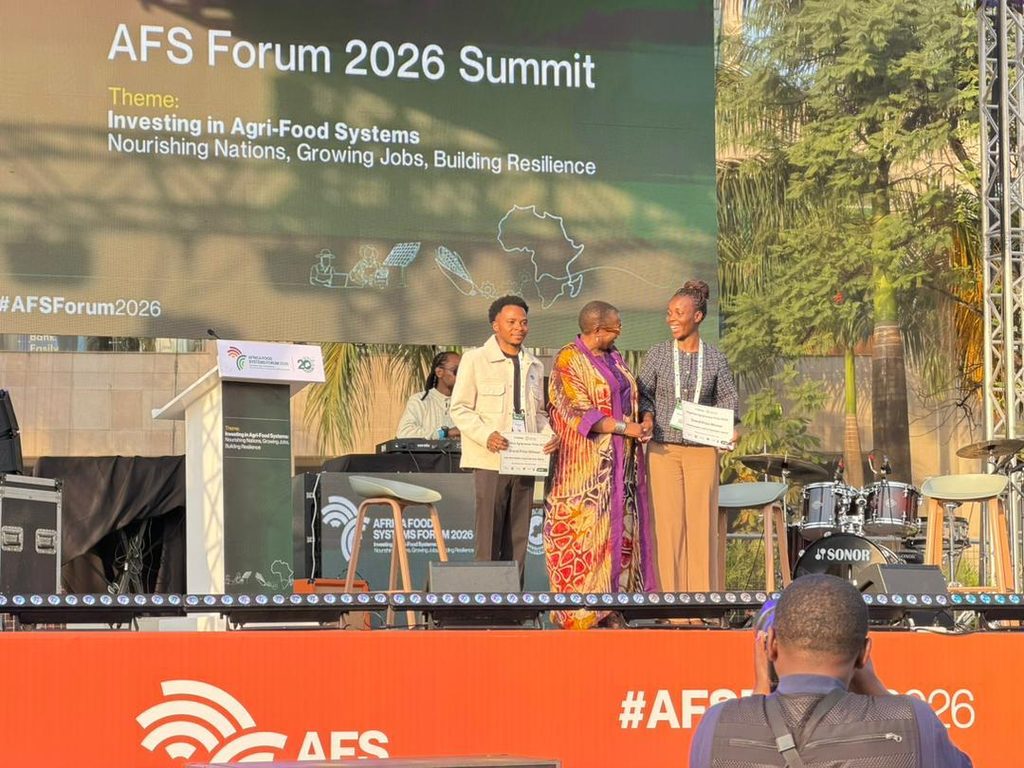
SANDI AI Technologies took the Grand Prize at the GoGettaz Agripreneur Prize 2026, announced at the Africa Food Systems Forum Summit in Kigali. The award — roughly UGX 190 million — recognises an AI system built to get farmers loans they currently cannot get.
To understand why that requires artificial intelligence, look at how a loan decision is normally made.
Traditional credit assessment runs on documented history. A lender wants formal employment records, a bank statement trail, and an asset it can claim if repayment fails. These inputs are proxies — imperfect stand-ins for the real question, which is whether the borrower will generate enough income to repay.
For a smallholder farmer, every proxy fails at once. There is no payslip because there is no employer. There may be no land title, or one shared across a family. There is no transaction history because the business runs on cash. The farmer may be entirely creditworthy; the assessment framework simply has nothing to read.
SANDI AI’s approach is to replace the proxies with better signals. The company applies artificial intelligence to build a fuller picture of a farmer — assessing needs, productivity and potential — and uses that understanding to open financing pathways that conventional models cannot reach. Instead of asking what a farmer can pledge, the system asks what a farmer can produce.
That reframing matters because the information exists. Crop cycles, land use, yields, input costs and local market prices are all real, measurable and predictive. They have simply never been assembled into a form a lender could act on. Machine learning is well suited to exactly this kind of task: finding reliable patterns in messy, non-standard data where fixed rules break down.
The result is credit assessment built on agricultural reality rather than banking convention — lending without collateral, priced on evidence rather than assumption.
SANDI AI’s work reflects a wider pattern in African technology. AI on the continent is being deployed less for automation and more for access: extending services, sharpening decisions, and bringing populations that formal systems overlooked into view. The bottleneck was rarely capital or willingness. It was information.
Founded by Nabakka Sandra, who works at the intersection of artificial intelligence and sustainable development, the startup will use the prize to advance its technology and reach more farming communities.
“Technology gives us an opportunity to understand farmers better, recognise their potential, and create pathways that allow them to access the resources they need to grow,” Sandra said.