

A wounded American airman, stranded in hostile territory, hiding in the mountains with limited supplies—this was the reality facing US forces after a fighter jet was shot down over Iran. What followed was a tense, high-risk rescue operation involving deception, intelligence warfare, and a race against time.
A Mission Gone Wrong
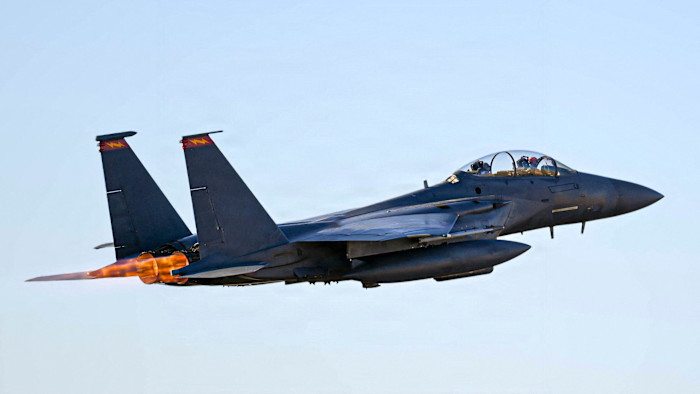
The crisis began on April 3, when a US F-15 Eagle was shot down during operations over Iran. The aircraft carried two crew members, both of whom managed to eject safely before the jet was destroyed.
One of them was located and rescued within hours. The second, however, disappeared.
What should have been a routine recovery quickly escalated into a dangerous search operation. The missing airman was alone, injured, and deep inside enemy territory.
Alone in Hostile Terrain
With no immediate support, the airman had to rely on survival training and limited equipment. Reports indicate he carried only a handgun and basic survival gear.
To avoid detection, he reportedly took shelter in a mountainous area, carefully limiting the use of his emergency beacon. Activating it fully could have revealed his position—not just to US rescuers, but also to Iranian forces searching for him.
Meanwhile, the risks were growing by the hour.
Iranian authorities signaled their intent to capture the airman alive. According to reports, a reward was offered, and search efforts intensified across southern parts of the country. Videos circulating online appeared to show armed civilians joining the hunt.
The situation had become a race against time.
A Complex Rescue Operation Takes Shape
As the search intensified, the United States launched a full-scale recovery effort.
The operation brought together multiple layers of military and intelligence capabilities. Surveillance systems tracked the airman’s movements, while elite rescue units prepared for extraction. Fighter jets and helicopters were deployed to provide cover, ready to respond to any threat.
The Central Intelligence Agency reportedly played a key role, monitoring the airman’s location and ensuring that rescuers could reach him without interception.
But reaching him would require more than just speed—it would require strategy.
Deception in the Shadows
To outmaneuver Iranian search efforts, US forces reportedly turned to deception.
According to accounts, misleading information was circulated suggesting that the missing airman had already been found. At the same time, multiple false location signals were generated, creating confusion about his actual whereabouts.
These tactics were designed to distract and delay Iranian forces, buying critical time for the rescue team.
As preparations continued, US forces also positioned assets to shield the operation. Reports indicate that airstrikes and defensive maneuvers were used to keep potential threats at a distance as the extraction team moved in.
The Extraction
As night fell, the rescue operation entered its final phase.
Under the cover of darkness, US forces reached the airman’s location. Despite being seriously wounded, he was successfully secured and evacuated.
Before midnight, he was flown out of Iran and transported to Kuwait, where he is now receiving medical treatment.
US President Donald Trump later confirmed the rescue, describing the airman as injured but expected to recover.
For the United States, the mission represented a significant achievement under extremely challenging conditions.
Conflicting Narratives Emerge
However, the story does not end there.
Iran has disputed the US account, claiming that its forces disrupted the operation. Officials described the mission as a failed attempt at deception, asserting that Iranian forces intervened before it could be completed as planned.
These competing narratives have left key details uncertain. Independent verification remains limited, and the full picture of what happened on the ground is still emerging.
Meanwhile, international reactions have begun to surface.
Israeli Prime Minister Benjamin Netanyahu praised the operation, calling it a demonstration of the enduring military principle that “no one is left behind.”
A Broader Message
Beyond the immediate rescue, the operation highlights the evolving nature of modern warfare.
Advanced aircraft like the F-15 Eagle are still vulnerable in contested airspace. At the same time, rescue missions are becoming increasingly complex, requiring coordination across intelligence, military, and technological domains.
Perhaps most importantly, the incident underscores the human dimension of conflict.
Behind the strategy and geopolitics was a single individual, isolated and at risk, relying on training and resilience to survive long enough for help to arrive.
The Unanswered Questions
While the airman is now safe, many questions remain.
How exactly was the jet brought down?
To what extent did Iranian forces track the operation?
And how close did the mission come to failure?
As tensions continue in the region, the answers to these questions could shape future military decisions on both sides.
For now, the rescue stands as a dramatic example of the risks, complexity, and high stakes that define modern conflict—where survival can depend on a mix of training, technology, and timing, and where even a single mission can carry global implications.